Republic Act 8749 “Philippine Clean Act Act of 1999”
Section 21-c of RA 8749: “In order to ensure the substantial reduction of emissions from motor vehicles, the Department of Trade and Industry (DTI), together with the DOTC (now DOTr) and the Department (DENR), shall formulate and implement national motor vehicle inspection and maintenance program that will promote efficient and safe operation of all motor vehicles.”
Roadworthiness- Efficient and Safe Operation defined:
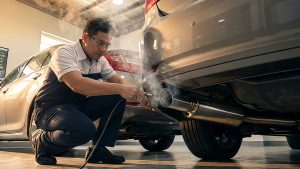
- Efficiency refers to fuel and combustion performance that minimizes the rate of pollutants discharged into our air. Under the Private Emission Testing Center (PETC) of the joint DTI, DENR, DOTr program, motor vehicle has to passed emission test to be deemed efficient and safe.
- Safe Operation refers to the mechanical integrity that enables efficient combustion, prevents accidents, mitigates road risks, and reduces driver fatigue. A vehicle with strong mechanical integrity contributes significantly to fuel efficiency, thereby reducing harmful emissions.
- Technically, a vehicle is deemed roadworthy when it achieves both; Efficiency and safety are mutually inter-dependent. One cannot exist without the other.
A National Inspection and Maintenance (I/M) Program:
The collaboration of three (3) agencies- DTI, together with DOTr and DENR, shall formulate and implement a national program to promote efficient and safe operation of motor vehicles to ensure a substantial reduction of emissions.
- The PETC program is anchored in this legal mandate to inspect the integrity of vehicle’s mechanical components related to emission control.
- While currently limited to emission testing, the PETC program can be enhanced with a few improvements to include comprehensive inspection to ensure “efficient and safe operation of motor vehicles.”
- Mandatory periodic vehicle maintenance is a twin component of I/M. Serious implementation of regular maintenance assures A1-condition of the vehicle while in use, producing less harmful emissions.
- Stand-alone annual inspection done only during the renewal of vehicle registration, without mandatory periodic maintenance is not the intention of the Law. The Law’s true intention is promoting a culture of continuous maintenance “for efficient and safe operation.”
Focus on Major Pollution Contributors on the Road:
Implementing Rules and Regulations (IRR) of the Philippine Clean Air Act of 1999, Rule XXXIV “National Motor Vehicle Inspection and Maintenance Program”, Section 2 Phase Implementation: “The DOTC/LTO shall ensure that the Motor Vehicle Inspection System shall be fully operational in Metro Manila by January 2003. Nationwide implementation shall follow in twelve (12) to eighteen (18) months thereafter. The vehicle inspection will be initially conducted in the LTO-operated MVIS or LTO Motor Vehicle Registration Centers. Priority shall be given to the immediate testing of diesel-powered vehicles.”
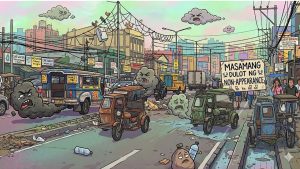
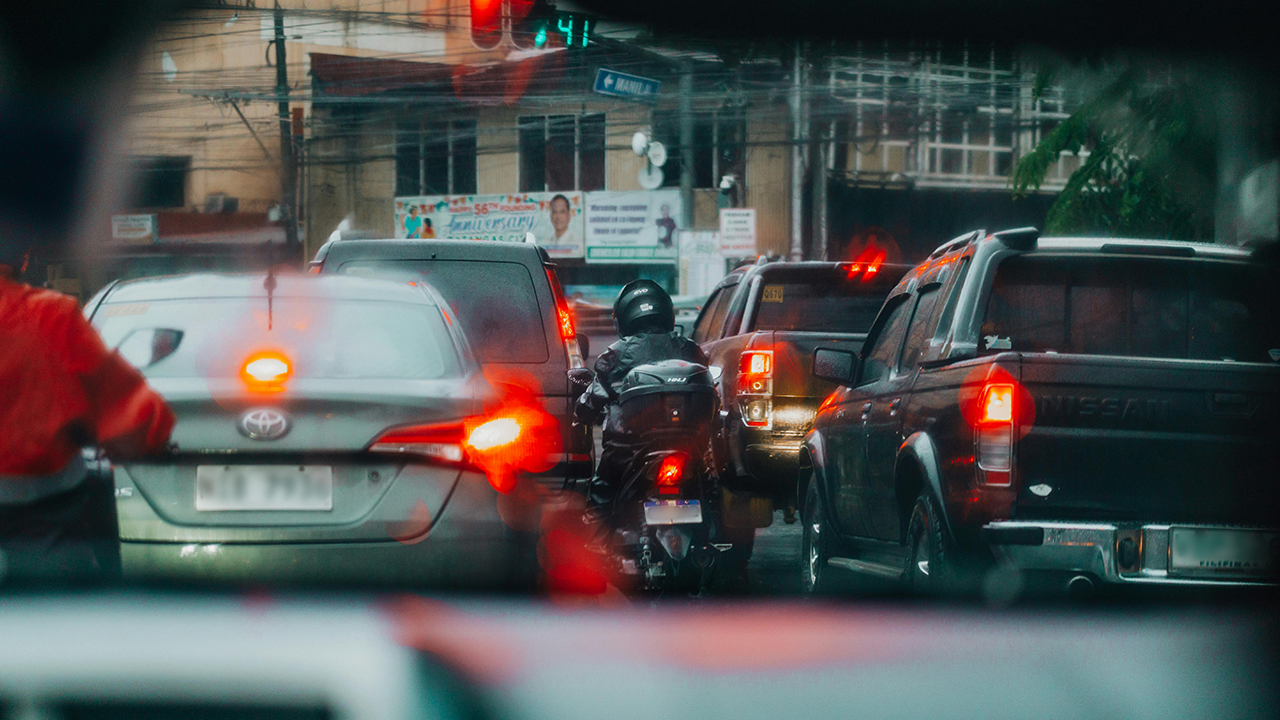
- The initial focus of vehicle inspection and testing is on diesel-powered vehicles which was identified during the Congressional deliberation of the Clean Air Bill (1998) as a major contributing element because of its common use in freight trucks, buses, delivery vans, PUJs, and other public utility vehicles which have the longest operating hours on the road. Over-utilization contributes more pollution and statistically increases the chances of road accidents. The situation of over-utilization has not changed after 20+ years with the entry of TNVS and motorcycle-for-hire. The increase in volume have added to traffic congestion hence more pollution, and more chances of road accidents.
- More than ever, serious government consideration on motor vehicle inspection and maintenance should focus on PUVs, delivery vans, and freight trucks.